
As a cooperative business, we operate on a few core principles. Democratic Member Control, Concern for Community, and Autonomy & Independence are just a couple of our values that you can see in everything we do. The co-op was born from community members wanting to make change, and so we encourage our community to get civically engaged.
Especially as we begin MN FoodShare month – our time to raise awareness and advocate for food accessibility in our neighborhoods – it is vital that we know how to make our voices heard.
Local government decisions matter, and St. Paul offers pathways for residents to stay engaged, ask questions, and weigh in on issues that shape the city now and into the future. This guide outlines some of our main civic bodies, what they do, and how you can stay informed and get involved.
When residents pay attention and participate, the government becomes more accountable.
Civic Engagement does not require special expertise. It starts with awareness and a willingness to show up and share your lived experience. From neighborhood councils to the City Council chamber, we’ve gathered the basics here and have some recommendations on where to start.
More about your local government
The Mayor
As the City’s chief executive, the Mayor of Saint Paul is responsible for keeping our city working every day.
As described in the City Charter, the Mayor:
- Recommends a budget to the City Council every August
- Appoints and supervises directors of all City departments
- Chooses the members of City committees, boards, commissions, and other advisory groups
- Can veto the City Council’s policies
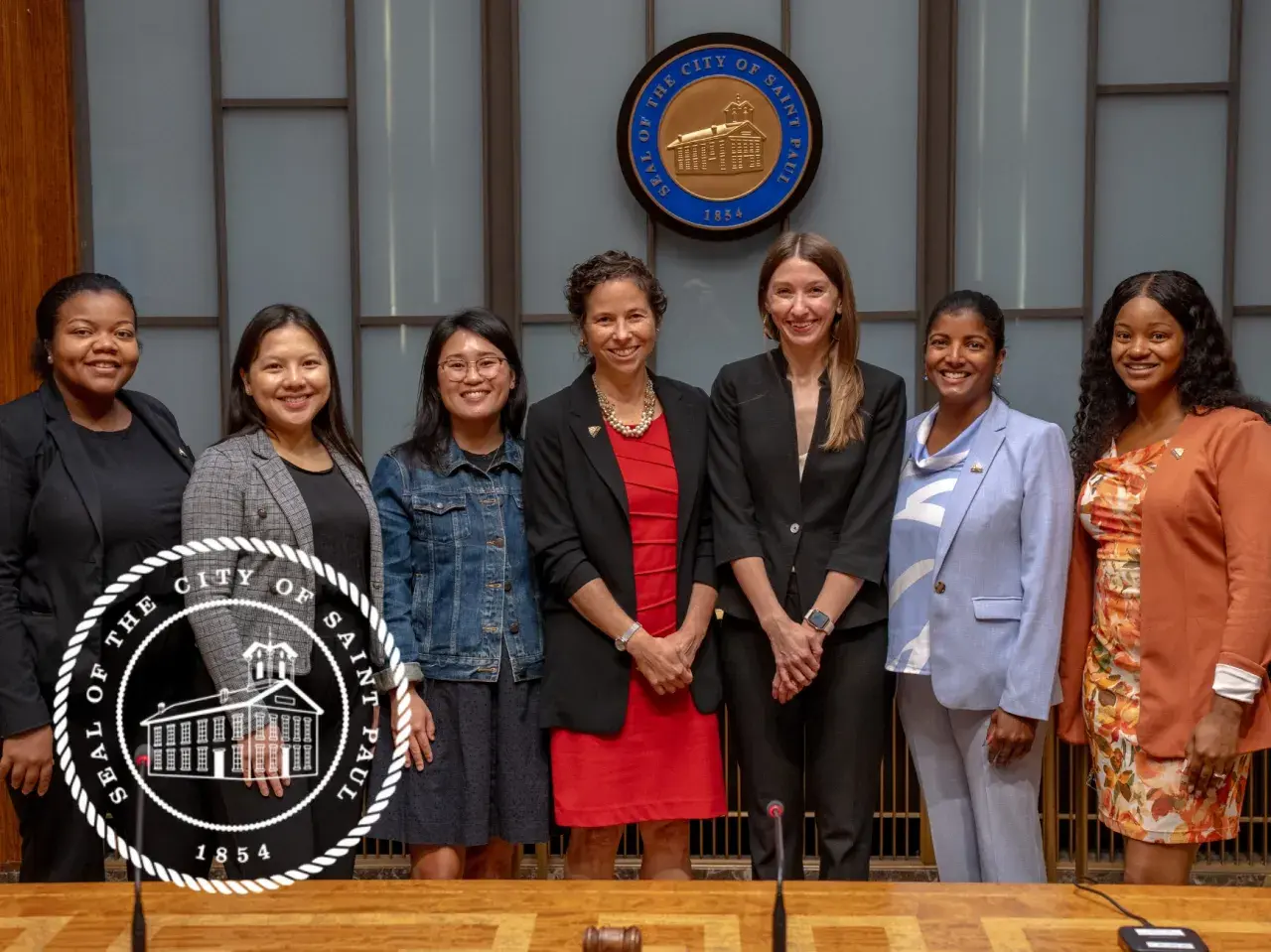
The Mayor fulfills the duties of office in coordination with the rest of City government. Eighteen department directors, more than 3,000 City employees, and seven city council members keep local government working for Saint Paul.
City Council
The Saint Paul City Council is the city’s legislative body. Regular council meetings allow the public to hear what decisions are being considered and typically include time for public comment. In addition to full council meetings, there are committee meetings that focus on specific areas such as public works, public safety, and finance.
The council generally meets twice a month, with committee meetings scheduled during off weeks. Meeting dates, agendas, and participation details are posted on the city’s official website.
What does the City Council do?
- Passes laws (ordinances) and resolutions
- Approves the city budget
- Holds public hearings on major issues
- Confirms appointments
- Oversees citywide policy
Commission Meetings
Commissions are advisory bodies that focus on specific subject areas such as planning and economic development, parks and recreation, human rights, arts, or disability access. Members are typically resident volunteers appointed by the mayor and confirmed by the City Council.
Much of the detailed policy discussion happens at the commission level, such as the Planning Commission reviewing development proposals or the Human Rights Commission addressing equity and discrimination concerns.
Each commission sets its own meeting schedule, with some meeting monthly and others less frequently. Meeting calendars and agendas are posted on the city’s website under Boards and Commissions.
See a list of all commissions.
What do Commissions do?
- Study issues in depth
- Advise the council and mayor on specialized topics
- Host hearings or discussions on the subject area
- Provide a professional or community perspective
Neighborhood Level Councils and Associations
These are community-based bodies that focus on issues at the local level – including traffic, public safety, land use proposals, neighborhood events, and small-scale improvement projects. Neighborhood Councils gather input from residents and provide recommendations to city departments and elected officials on matters affecting their area.
Most councils meet monthly, though the specific day and time vary by neighborhood. Meeting schedules and contact information are available on the city’s neighborhood website.
Find your neighborhood district council.
What do Neighborhood Councils do?
- Bring neighborhood concerns forward
- Review land use and development proposals affecting the neighborhood
- Work with city departments on safety, parks, and streets
- Organize community events
- Communicate resident priorities
Here are some Neighborhood Councils in our area:
- West 7th Fort Road Federation
- Macalester-Groveland Community Council
- Highland District Council
- North End Neighborhood Organization
- Frogtown Neighborhood Association
- Summit University Planning Council
- Union Park District Council
- D10 Como Park Community Council
- Hamline Midway Coalition
- Saint Anthony Park Community Council
- Dayton’s Bluff Community Council
- Southeast Saint Paul Community Organizations
- Greater East Side Community Council
- Payne-Phalen
How to Get Involved
- Attend a city council, commission, or neighborhood meeting
- Subscribe to your neighborhood council newsletter
- Find an issue you care about and speak at a public comment at the city council or a commission meeting
- Meet with the City Council Official for your ward
If you want deeper involvement
- Apply to serve on a board or commission
- Join a Neighborhood Council